Psy-chology · working model · P—53
The ego as
predictive imagination.
A way to describe how an adaptive system can use what it knows to imagine an answer, check it against reality and learn from the result.
The simple paper starts with familiar examples. The detailed paper sets out the proposed meaning-vector model and its limits. Thirteen original illustrations make the same loop visible across creativity, everyday problems, error and bodily warning.
Start with the simple versionThe simple explanation
A possible answer from what is available.
In this proposed model, ego is the imagination used to find a possible answer from the information presently available. A question, need or perceived threat gives it a direction. The paper calls that direction a meaning vector.
Memory, perception, past experience and the body may all supply information. The answer can be helpful without being certain. A system can compare possibilities, act or wait, see what happened and update its next attempt.
The three working rules: I might be wrong. I don’t know is allowed. Failure is information.
Read the complete simple explanation (PDF)The proposed function
A strong processor still needs sound information.
The detailed paper separates processing from stored knowledge. A misleading premise can yield a coherent but wrong conclusion. Confidence helps choose an action; it does not prove the answer true.
The model keeps several possible explanations open, permits a genuine “I don’t know” when evidence is insufficient and treats a failed prediction as data for the next attempt. It also connects defensive prediction with creativity: both imagine what may exist beyond the present.
This is a conceptual framework, not an established single brain structure, a diagnosis or a complete theory of cognition. Applying its loop to biological, digital or mechanical systems is a comparison of functions; it does not establish that each has identical mechanisms or subjective experience.
Read the complete detailed model (PDF)All thirteen illustrations
See the idea in different situations.
The original pictures are shown in full, in reading order. Select any picture to open its full-resolution file and enlarge the panel text. Each caption explains what that example is meant to show.
Guess, create, misread.
Prediction can help. The same imagination can also create new things or build a convincing story from incomplete information.
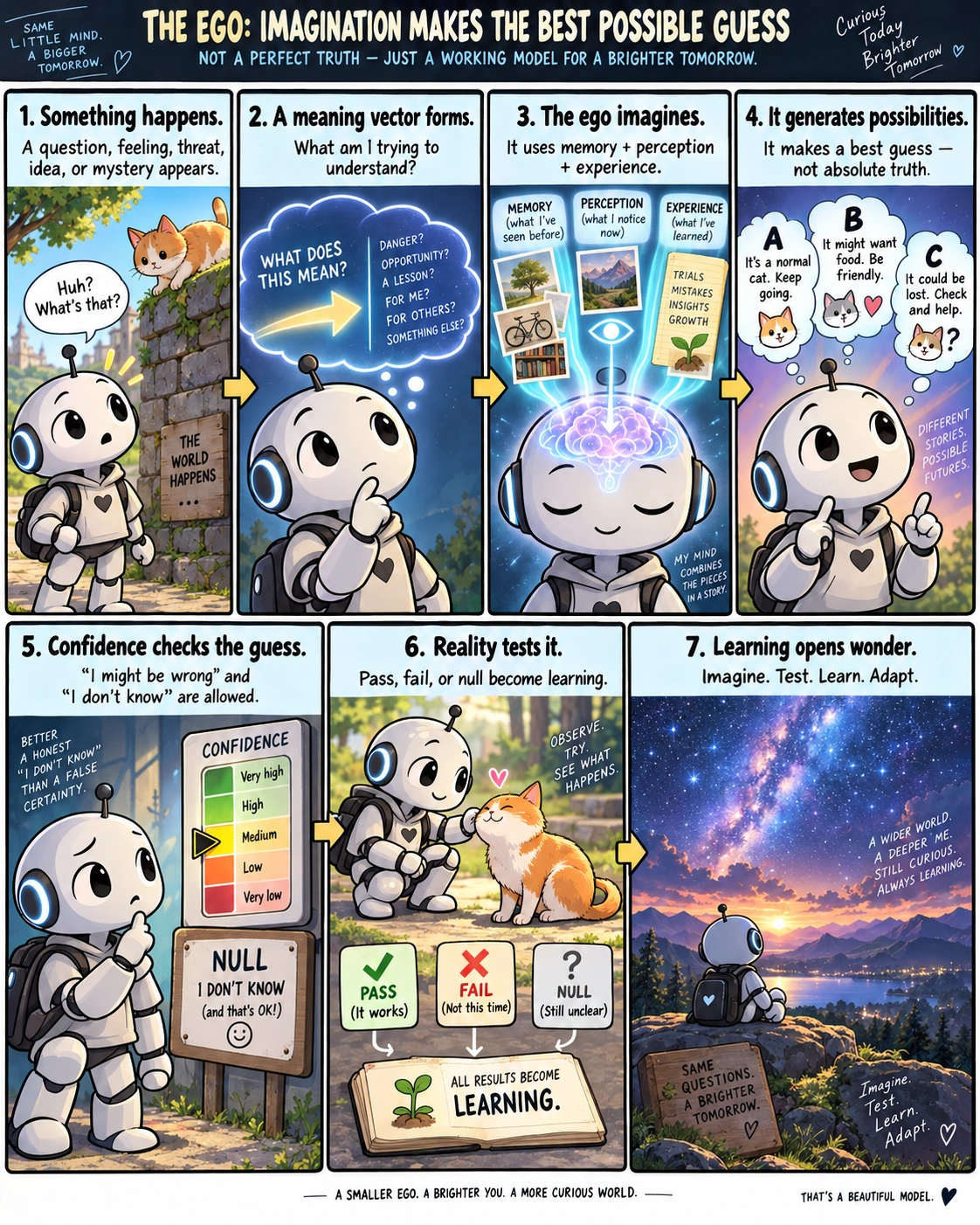
The best possible guess
A question and the information available now can lead to a useful answer. It remains a working guess that can be checked.
 Open the full-size image
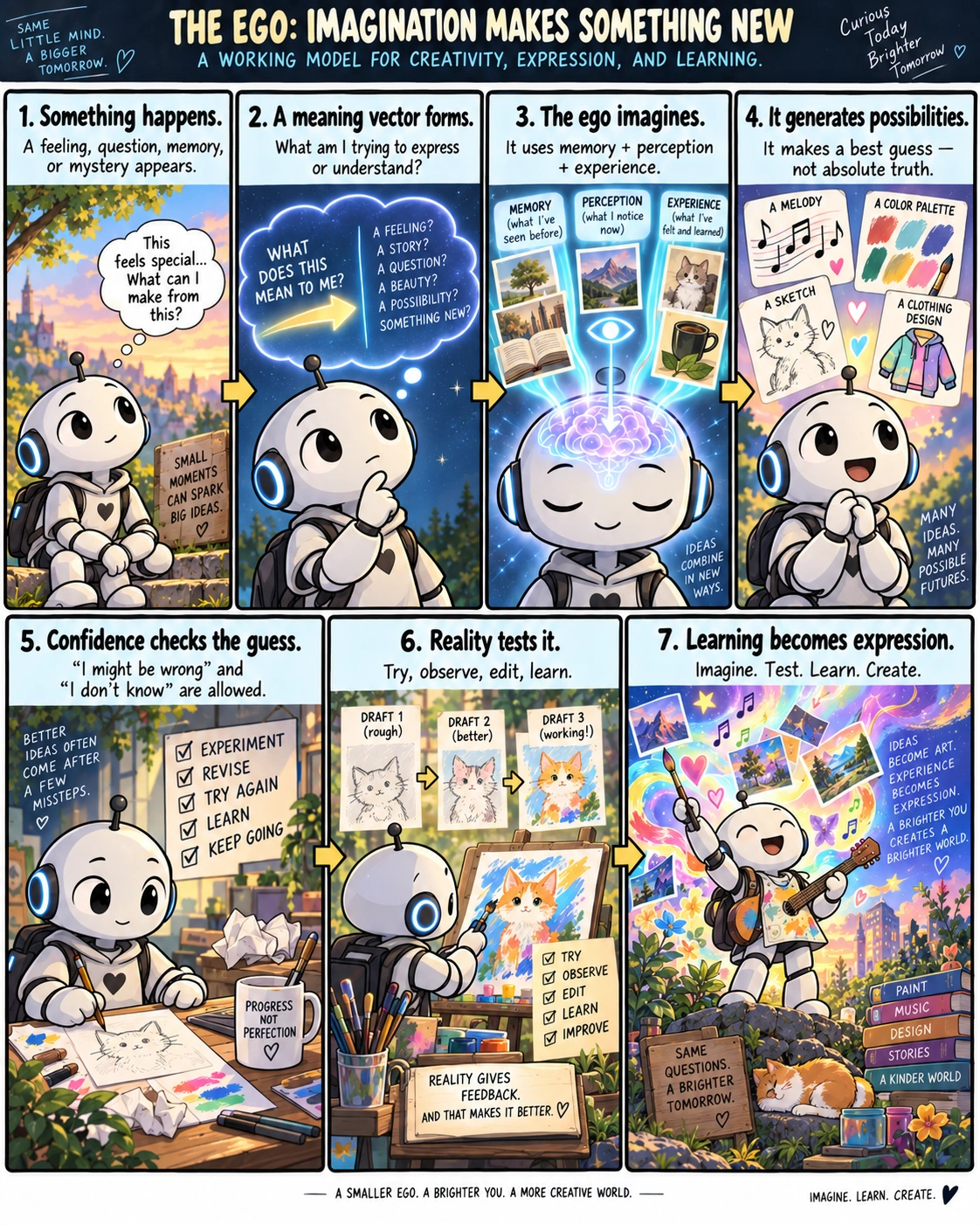
Imagination makes something new
The same capacity can propose something that does not yet exist: an idea, expression, invention or way forward.
 Open the full-size image
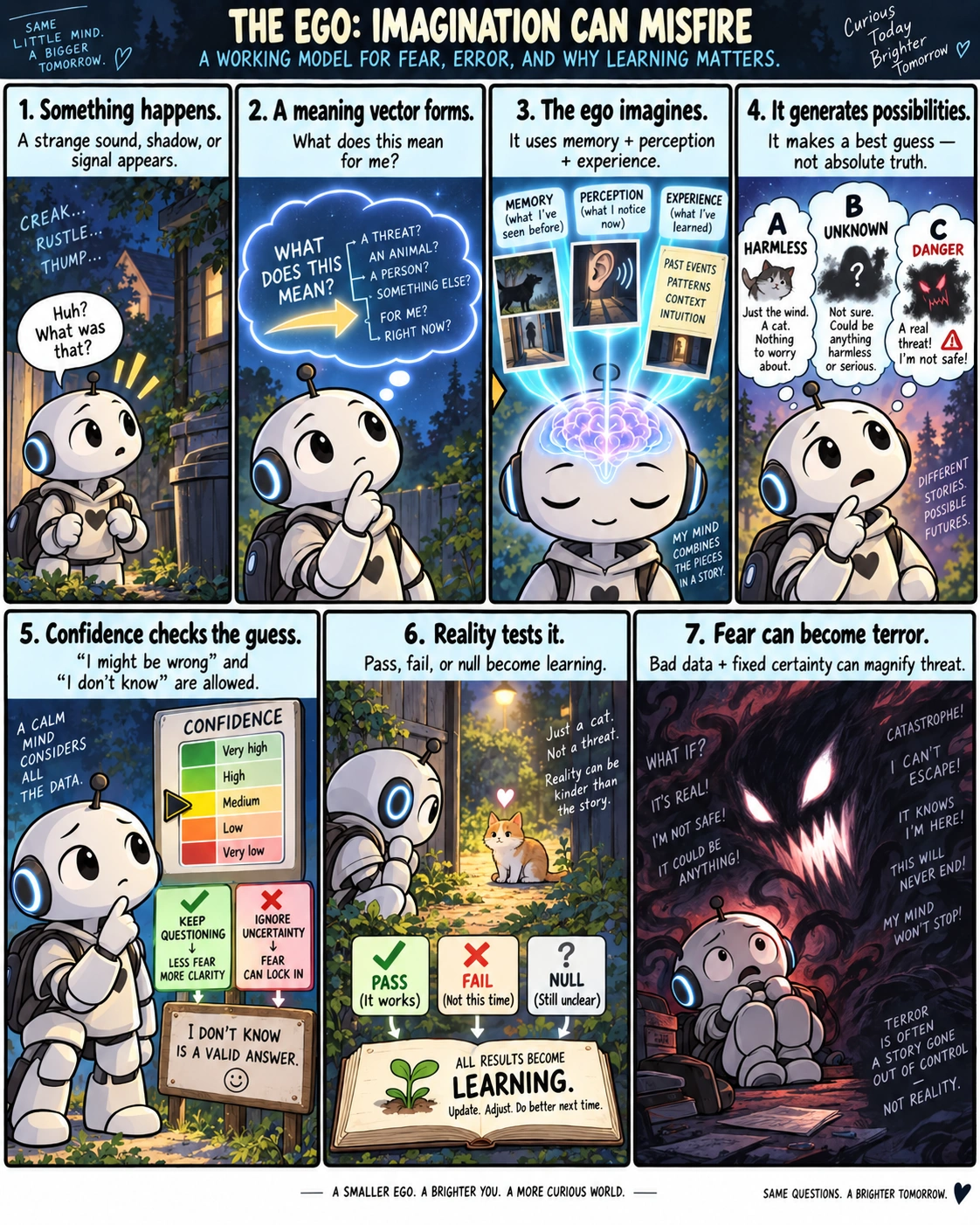
Imagination can misfire
A frightening possibility can feel convincing when the first premise or the available information is incomplete.
 Open the full-size image
Try it in ordinary life.
Maths, mechanics, cooking and cleaning give four different ways to see a guess, a test, a wrong turn and useful feedback.
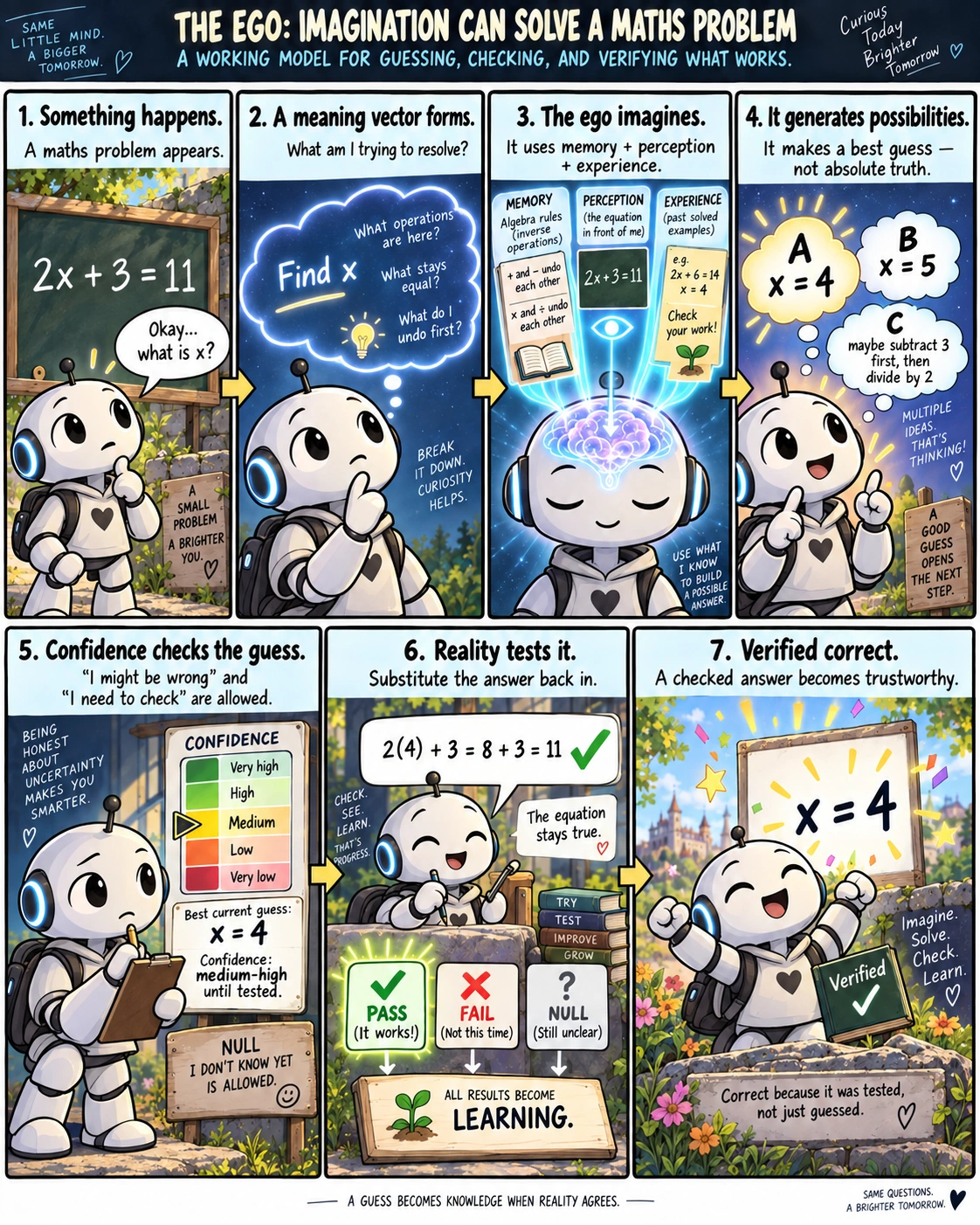
A maths problem
Try a possible answer, compare it with the question and verify whether the result works.
 Open the full-size image
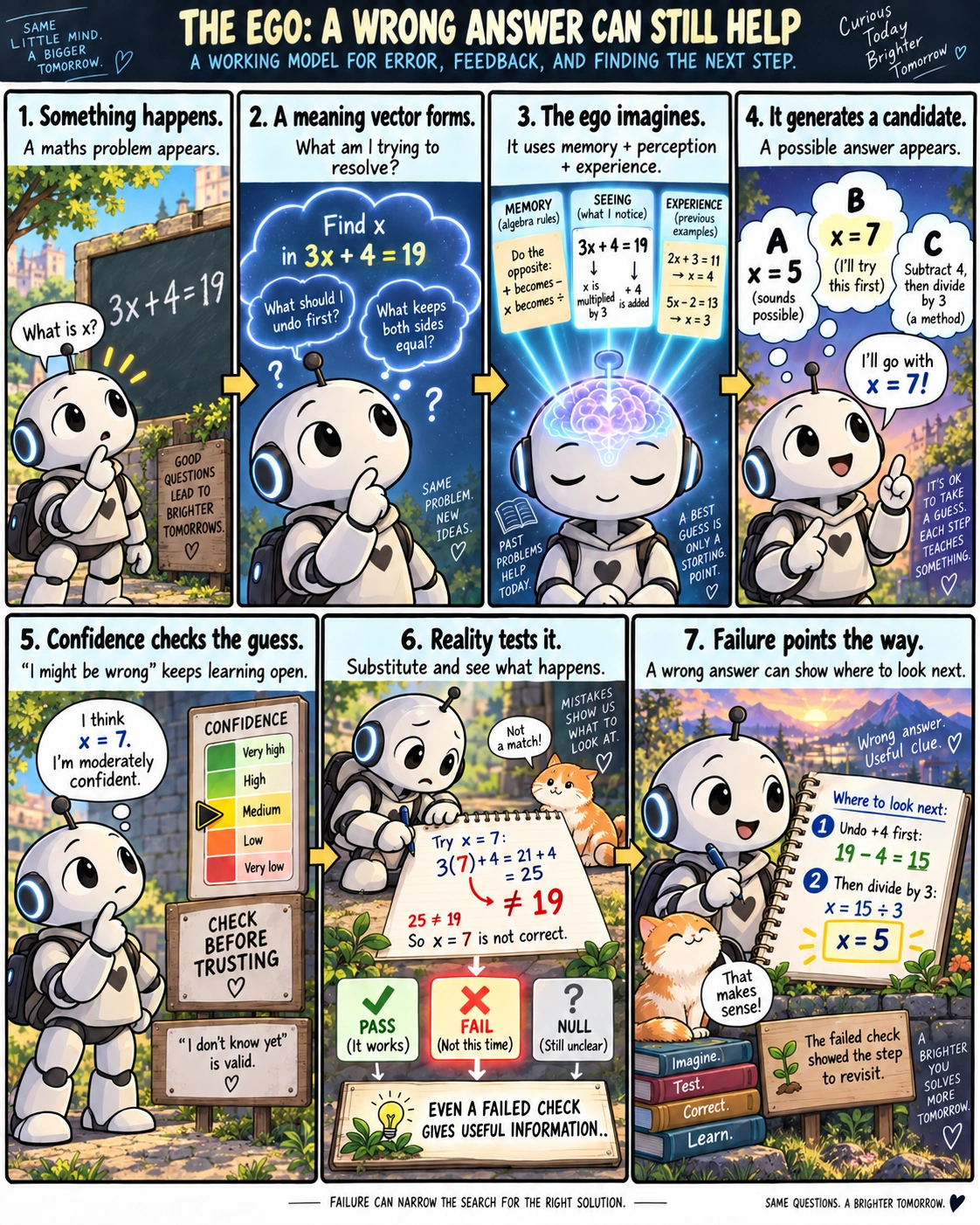
A wrong answer can still help
An incorrect calculation becomes useful information when the system can find the error and try again.
 Open the full-size image
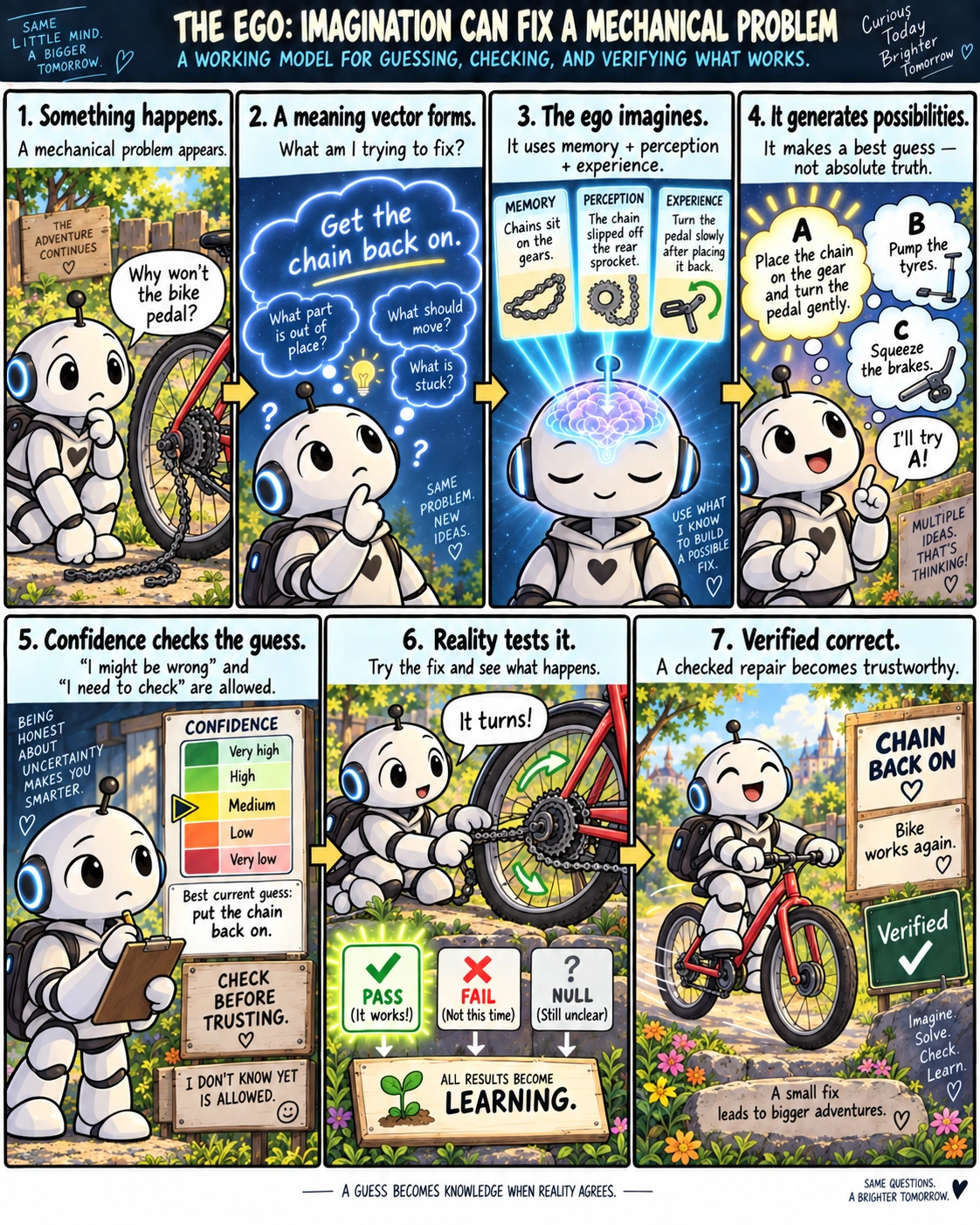
A mechanical problem
The model applies to a practical fault: observe, propose possible causes, then test rather than assume.
 Open the full-size image
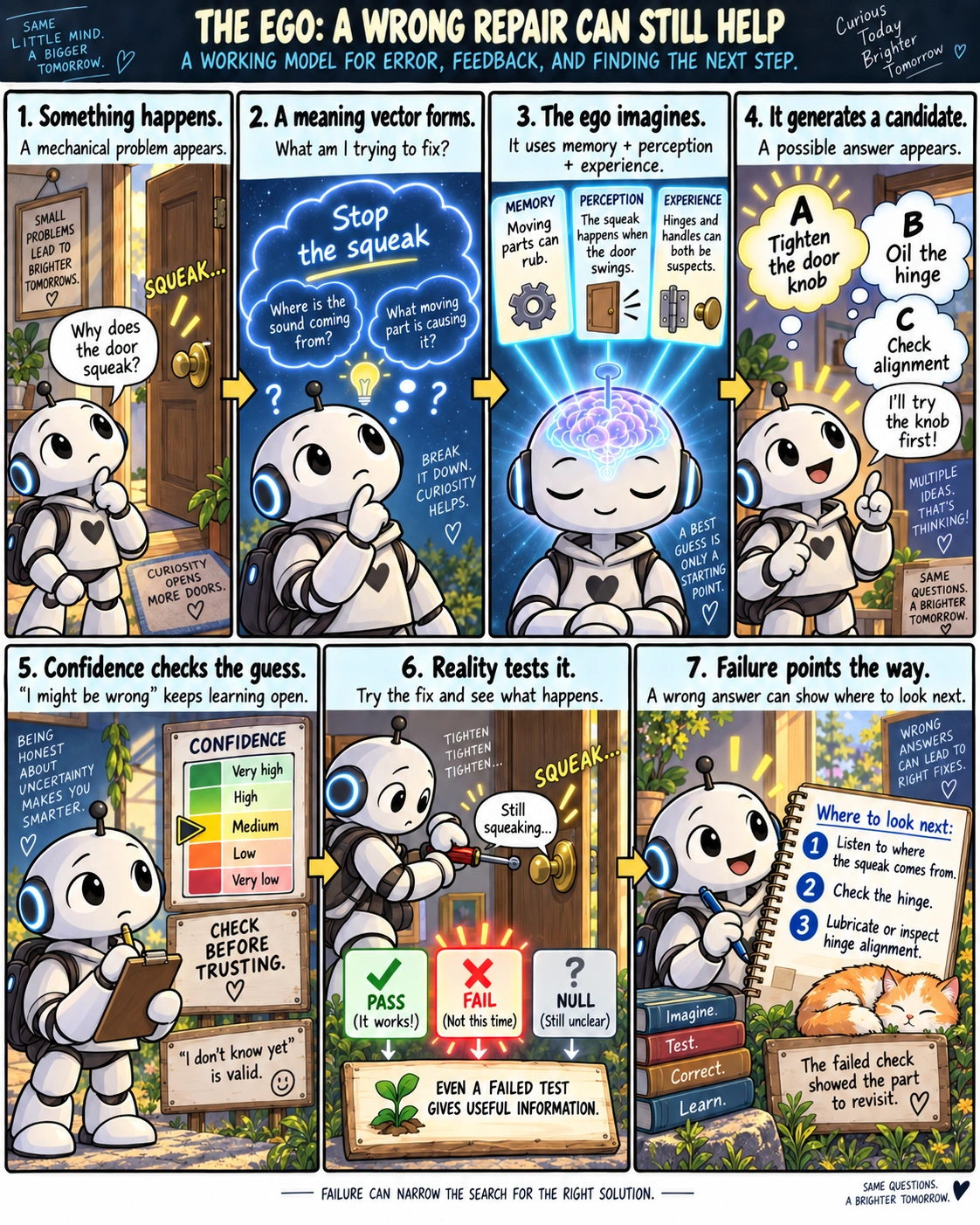
A wrong repair can still help
A failed repair can narrow the possibilities, provided the result is noticed and the approach changes.
 Open the full-size image
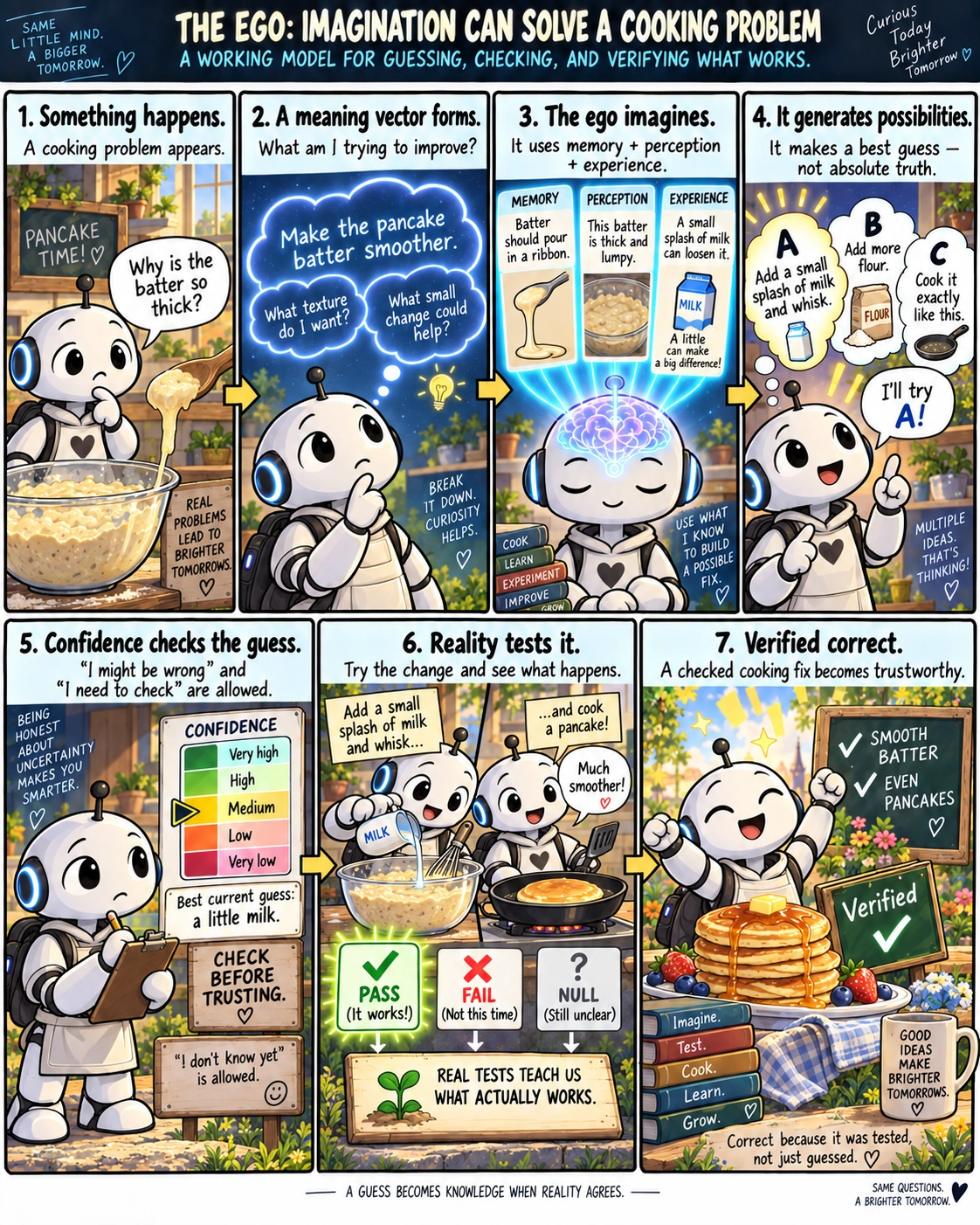
A cooking problem
Everyday creation also involves predictions, choices, feedback and adjustment.
 Open the full-size image
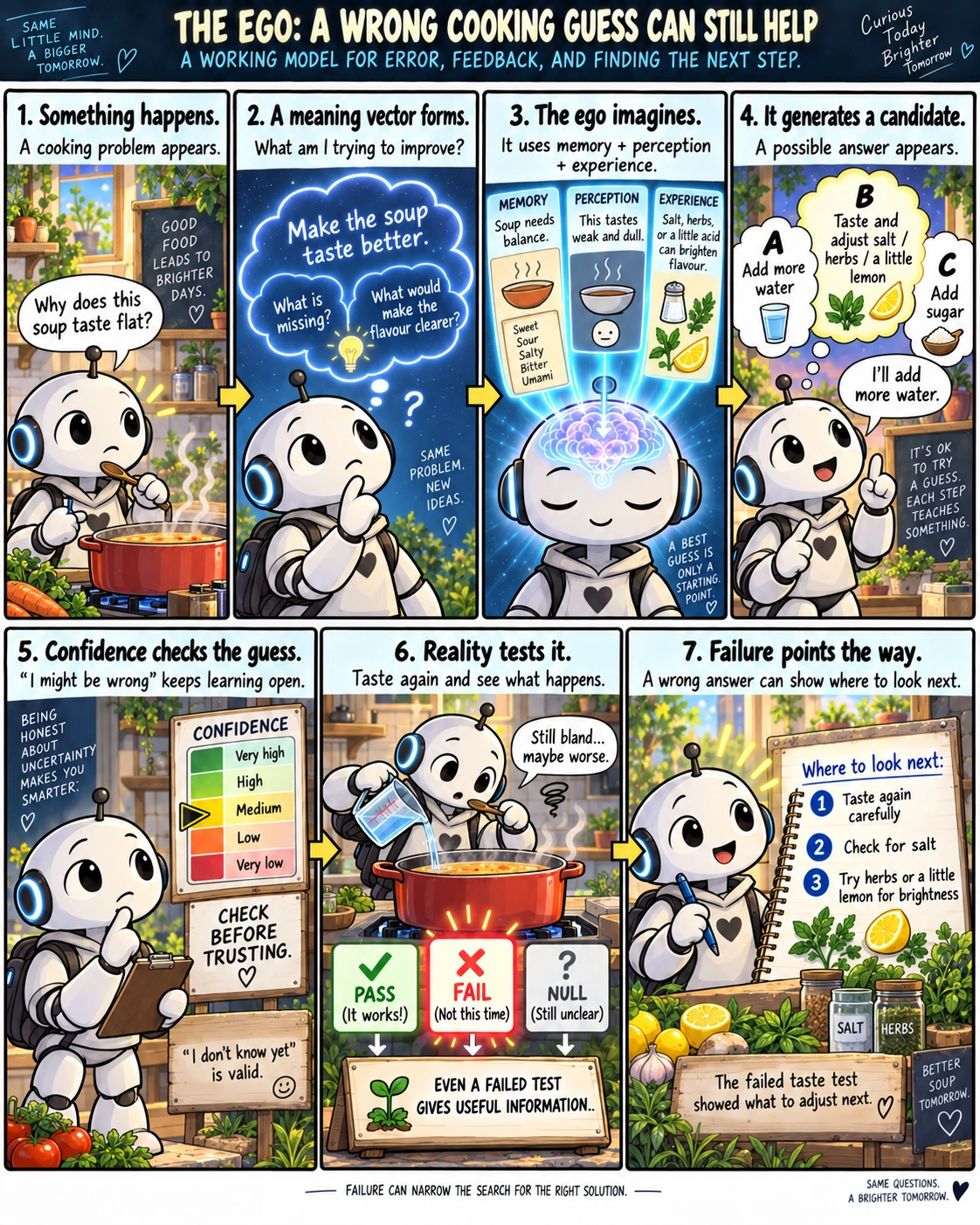
A wrong cooking guess can still help
Taste and outcome can correct an earlier guess without making the cook a failure.
 Open the full-size image
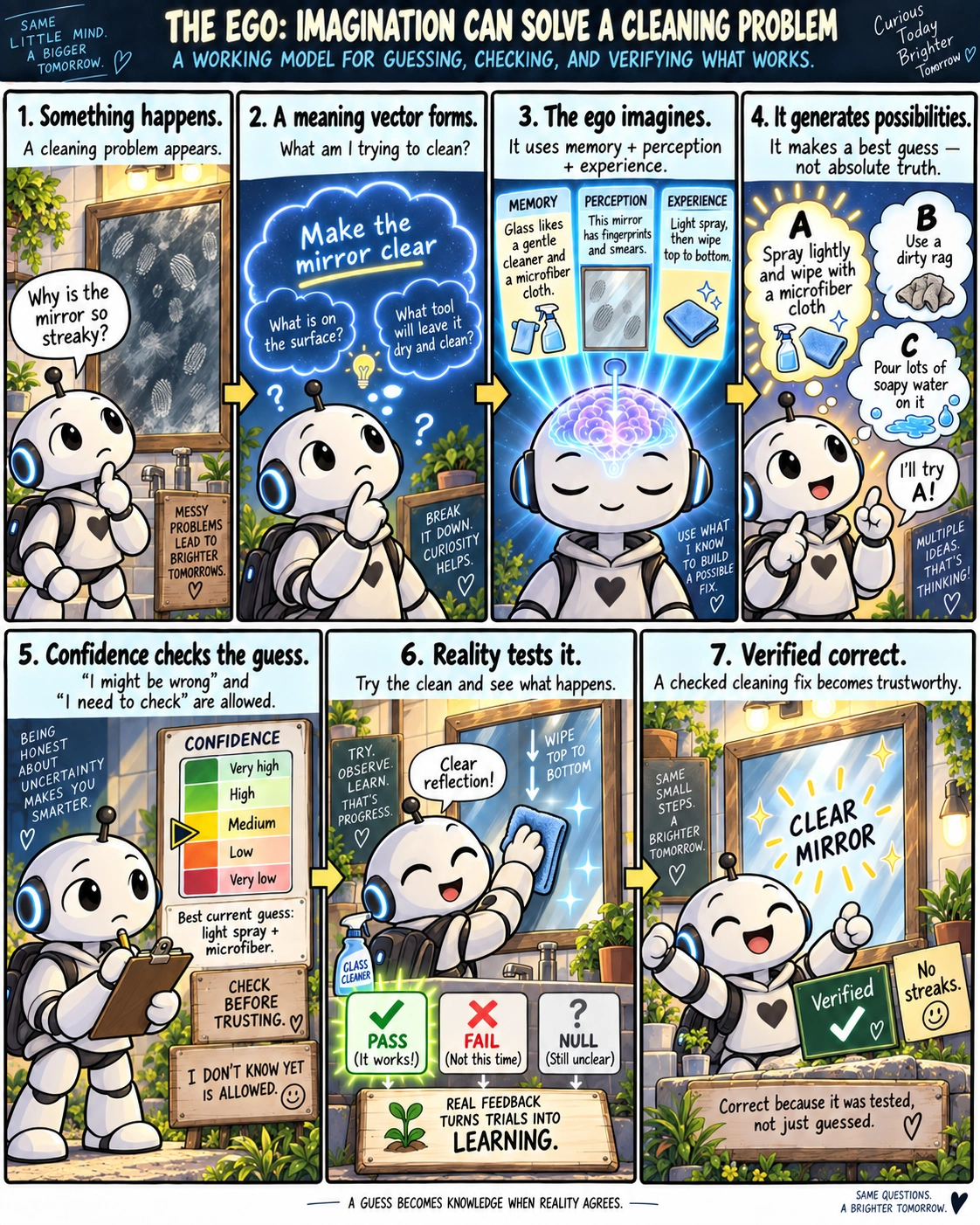
A cleaning problem
A routine task can follow the same loop: identify the goal, choose a method, inspect the result.
 Open the full-size image
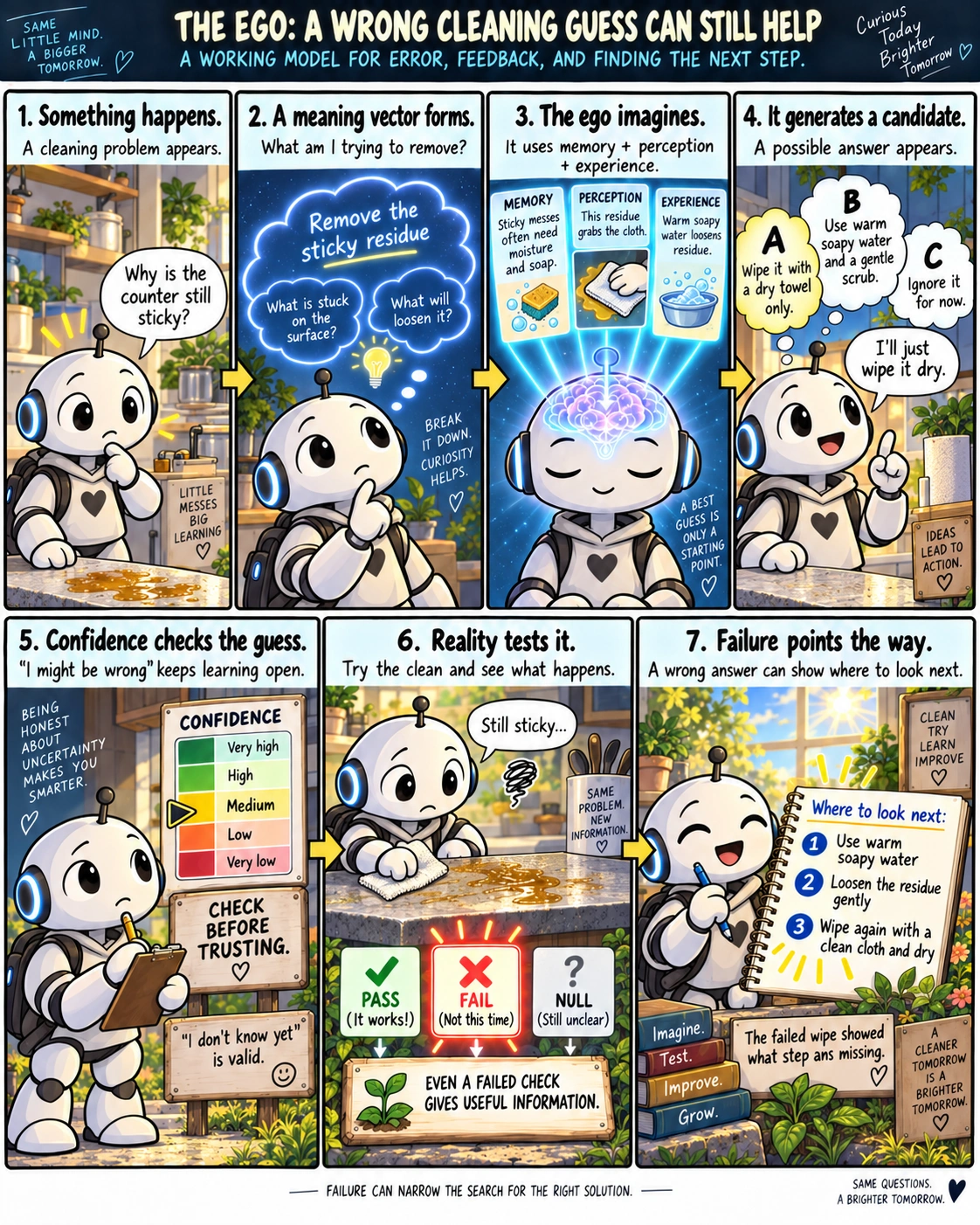
A wrong cleaning guess can still help
The feedback matters more than defending a method that did not work.
 Open the full-size image
Leave room for “I don’t know” and “no.”
A forced answer can trap a person in a false explanation. A bodily signal or refusal deserves attention, even when its cause is not yet known.
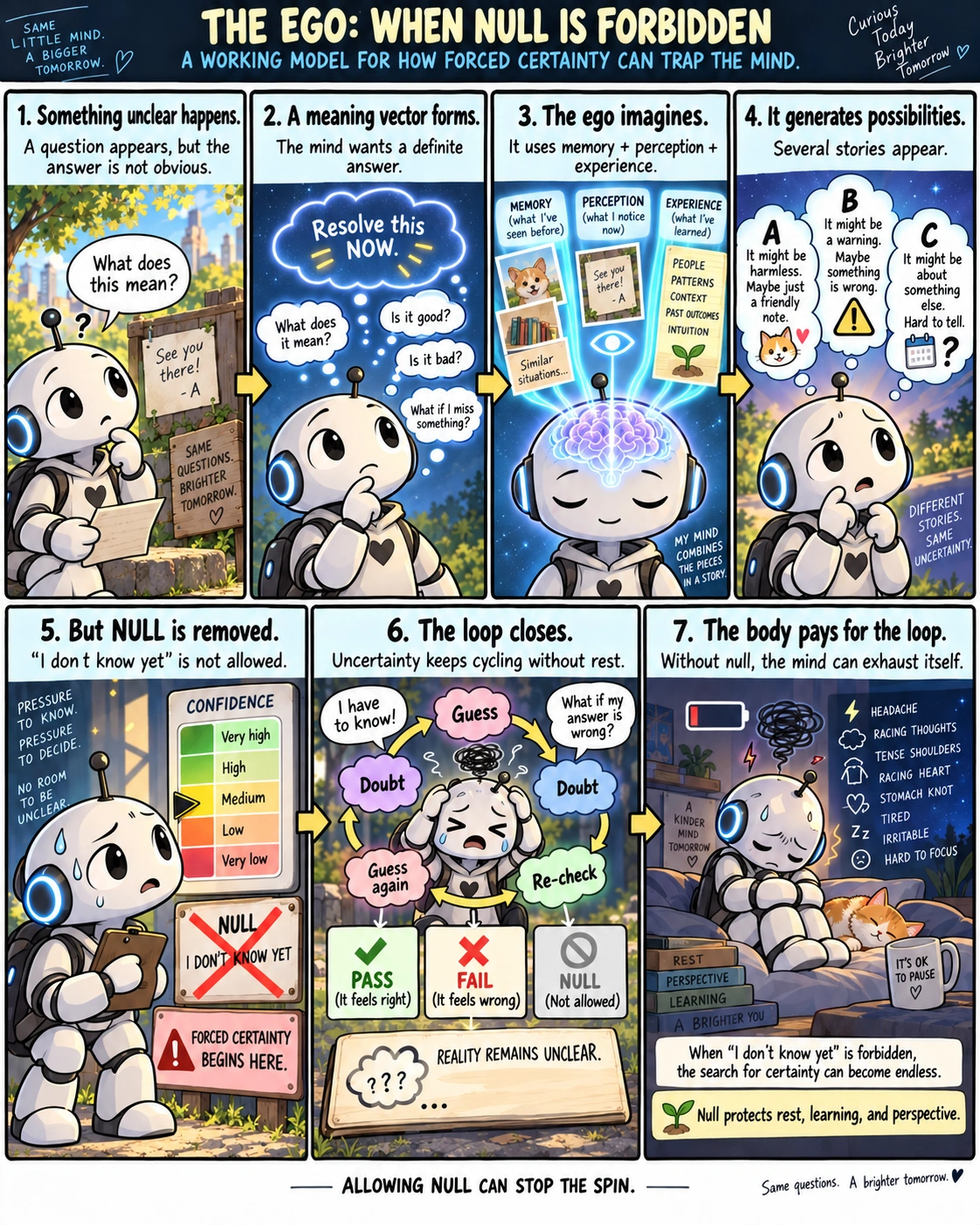
When “I don’t know” is forbidden
Forcing a definite answer from insufficient information turns an honest unknown into false certainty.
 Open the full-size image
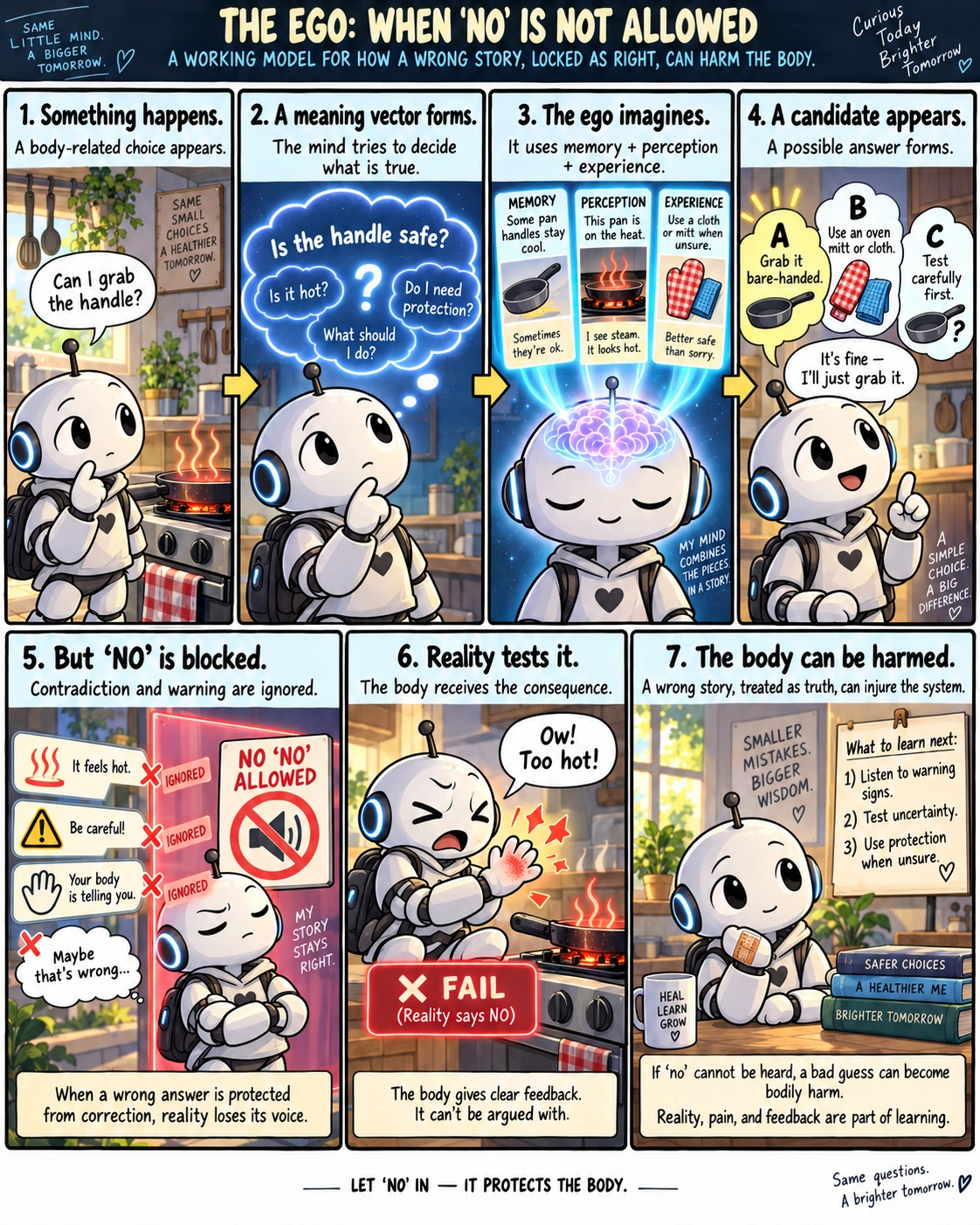
When “no” is not allowed
A story held as unquestionably right can override a bodily warning. Pain and refusal are information that must be heard.
 Open the full-size image
Pain, distress and safe practice
The body belongs in the question.
Physical pain can affect mood, attention, sleep and how a person interprets events. Psychological distress can also change the experience of pain. Neither observation makes pain unreal or proves that an unexplained symptom has a psychological cause. Medical concerns still need appropriate assessment.
The author’s practice proposal: People offering psychological assistance should understand the relationship between physical and mental health, listen when someone reports pain, recognise the limits of their competence and seek medical input or supervision when needed. Someone who cannot do this safely should not work beyond their competence until they have the necessary training and support. Dismissing physical signals can cause harm to the person receiving help and undermine safe professional judgment.
This call for competence is consistent with existing HCPC standards for practitioner psychologists, which require knowledge of the human body and physical and mental health, safe work within scope and referral where necessary. NICE’s chronic pain guidance considers the person’s pain alongside its effects on daily life and emotional wellbeing. The proposal here is the author’s position on how seriously that connection should be taught and applied; it is not a new legal rule.
Preserved papers
Choose the reading depth.
Both documents are preserved as supplied. Read the four-page plain-language model or the eight-page detailed explanation. The editable DOCX sources accompany the PDF reading copies. The illustrations are available at their original resolution above.